
Buying a Home with a Past Slab Leak in Perris, CA
What to ask the seller, which records to request, how past repair methods differ, and when a leak inspection is worth ordering before you commit. Confirm the present condition, then decide.
Finding out that a home you like has had a slab leak is unsettling, but it is rarely the end of the conversation. Plenty of homes have had a hidden leak repaired properly and gone on for years without another problem. What matters is what failed, how it was fixed, who did the work, and what the rest of the plumbing looks like.
That is the real job when buying a home with a past slab leak in Perris: turn a vague worry into specific answers before the inspection period ends. This guide walks through what to ask the seller, which records to request, how repair methods differ, when a leak inspection is worth ordering, and how to weigh the findings.
It is general plumbing and process information for buyers, not legal, real estate, or insurance advice.
Buying a Home with a Past Slab Leak: The Direct Answer
A past slab leak does not automatically make a home a bad purchase. A documented repair by a licensed contractor, no repeat leaks, and a clean leak inspection are all reassuring signs.
Missing paperwork, several leaks in different spots, or unexplained new flooring over the same area deserve a closer look. The goal is to confirm the present condition, not to rely on the seller's memory.
Why a Past Slab Leak Matters to a Buyer
A repaired leak tells you about the past. A buyer needs to know three things about the present.
What failed
A single failed fitting is a different story from a pipe that has pitted through in several places. The cause of the first leak shapes how likely it is that another section is vulnerable.
How it was fixed
A local repair, a reroute around the leak, a less invasive lining, and a larger repipe each leave the home in a different condition. The method also affects how well the repair is documented and warranted.
What the rest of the system looks like
One leak does not prove the whole system is failing, and a repair does not prove it is sound. Plumbing age, pipe material, water pressure, and repair history help answer that, and a leak inspection tests it directly.
What to Ask the Seller First
In California, sellers generally provide a Transfer Disclosure Statement that asks whether they know of significant defects or malfunctions in systems such as plumbing, and they must explain any they identify, according to the California Department of Real Estate disclosure booklet. The statement is not a warranty and is not a substitute for your own inspections, so ask follow-up questions in writing.
- When did the slab leak happen, and where in the home was it?
- What was the cause, if the plumber identified one?
- How was it repaired: a local fix, rerouting, tunneling, a lining, or a repipe?
- Who did the work, and was it a licensed plumbing contractor?
- Were permits, invoices, or warranties issued, and do they transfer to a new owner?
- Has there been any moisture, warm floor area, running-water sound, or high water bill since?
- Was a water damage insurance claim filed, and what did it cover?
- Were floors, walls, or cabinets replaced during or after the repair?
Documents Worth Requesting
- The plumber's invoice and scope of work, including the exact leak location
- Any permit or inspection records, where a permit was required
- Contractor name and license information
- Warranty paperwork, and whether it can be transferred to you
- Photos from before, during, and after the repair
- Leak detection reports, if one was done before the repair
- Insurance claim paperwork related to the leak
- Water bills from before and after the event, if the seller is willing to share them
Missing paperwork does not prove a bad repair, but it does remove your ability to verify one. In that case the inspection matters even more.
Why the Repair Method Matters
Not every slab leak repair leaves the home in the same state. Use the table below to turn the answer you get into a follow-up question.
| Past Repair | What It May Suggest | What to Ask Next |
|---|---|---|
| Local spot repair | A single failure was addressed at the leak | Is the surrounding pipe sound, and has anything leaked since? |
| Reroute around the leak | Access to the original path was difficult | Where does the new line run, and is it documented? See pipe rerouting |
| Trenchless or lining repair | A less invasive approach was suitable | Which sections were treated, and is there a warranty? See trenchless repair |
| Tunneling access | The repair was reached from below | Was the work area restored and documented? See tunneling |
| Full repipe | Widespread failures or a broader decision | Was the whole system replaced or only part, and with what material? See full repipe |
The table is a guide, not a grade. A well documented spot repair can be a better outcome than an undocumented repipe.
Reassuring Signs and Red Flags
Reassuring signs
- Repair done by a licensed contractor with paperwork
- Leak location and cause clearly explained
- No repeat leaks at or near the same spot
- Warranty or records that transfer to you
- A clean leak inspection after the repair
Red flags
- No paperwork and no contractor name
- Several past leaks in different spots
- New paint or flooring over the same area, with no explanation
- A seller who cannot say how the leak was repaired
- Moisture or a warm floor area now
Fresh flooring is not proof of a problem, since people replace floors for many reasons. It is a reason to ask what is under it and whether the repair is documented.
A General Home Inspection May Not Evaluate Under-Slab Plumbing
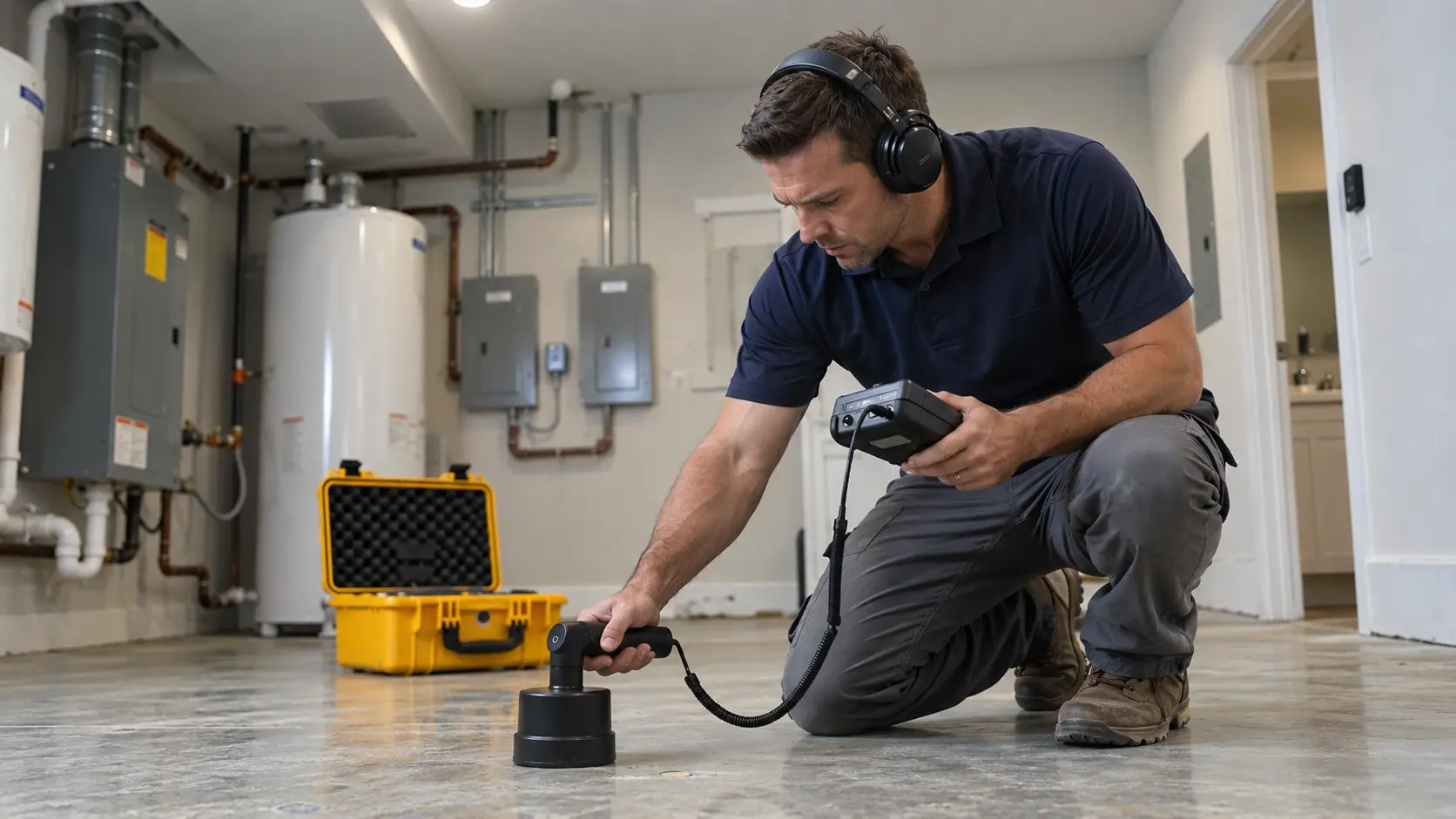
A standard home inspection looks at visible and accessible conditions. It generally does not tell you what is happening inside pressurized lines under a concrete slab. For a home with a leak history, a dedicated leak inspection can add information the general report cannot. For the wider picture, see this guide to a pre-purchase plumbing inspection.
- Review of the repair records and the symptoms you or the seller report
- Meter and pressure observations to see whether water is being lost
- Acoustic listening and moisture checks at accessible points
- Thermal imaging to look for temperature patterns, used as one clue among several
- A written summary of what was found and what could not be confirmed
Every method has limits. Thermal imaging does not see through concrete like an X-ray, pressure testing can show a loss without pinpointing it, and acoustic results depend on site conditions. A clean result is a snapshot of that day, not a lifetime guarantee. For background on locating hidden leaks, see slab leak detection in Perris and professional water leak detection.
Want the Plumbing Checked Before You Remove Contingencies?
If you are buying a Perris home with a leak history, a leak inspection during your investigation period gives you something concrete for negotiation or for deciding to proceed. Slab Leak Pros can help locate any active leak.
How to Evaluate a Home With a Past Slab Leak
Ask the seller specific questions in writing
Use the checklist above and ask through your agent so the answers are recorded.
Review the disclosure statement and any records
Compare what the seller says with the documents provided, and note gaps.
Request repair paperwork
Ask for invoices, permits, warranty, contractor details, and photos of the work.
Schedule a leak inspection early
Do not wait until the end of your investigation period, since access and scheduling take time.
Review the findings with your agent
Separate what is a confirmed active leak, what is a condition to monitor, and what is simply unknown.
Decide how to respond
Options include asking for repairs, negotiating a credit or price change, requesting a warranty, or choosing not to proceed.
Confirm warranty and insurance details before removing contingencies
Make sure transferable documents are in order and ask your insurer how the home's history is treated.
Check the dates in your purchase contract for the investigation period, since they control how much time you have. Your agent or a real estate attorney can explain the details of your contract.
Insurance and Claims History
Insurers often review a property's claims history when underwriting a policy. A CLUE report documents homeowners insurance claims over seven years, including the date, type of loss, and the amount paid, according to the National Association of Realtors. Only the homeowner can request one directly, so buyers and agents usually ask the seller for it or make an offer contingent on the results.
Talk with an insurance agent before you commit. A documented repair with no repeat problems is easier to explain to an insurer than an unknown one, but each insurer decides for itself, and nothing here predicts your premium or coverage. For how coverage generally works after a leak, see whether insurance covers slab leaks in California.
How Findings Can Turn Into Negotiation
| What the Inspection Shows | Possible Response |
|---|---|
| An active leak | Ask the seller to repair it with documentation, negotiate a credit or price change, or reconsider |
| Signs of moisture but no confirmed source | Ask for further investigation before you remove contingencies |
| Pipe in poor condition with repeated past leaks | Weigh the cost and scope of a larger project, see repipe vs slab leak repair |
| Sound plumbing and a documented repair | Proceed with records in hand and a baseline for later |
Do not assume a repipe is automatic. One repaired leak with sound surrounding pipe does not by itself call for replacing the system.
When to Pause and When It May Be Reasonable to Proceed
Pause or reconsider if
- There were several leaks suggesting wider failure
- The seller cannot produce any repair record
- Your inspection finds an active leak that was not disclosed
- There are signs of unrepaired water damage
It may be reasonable to proceed if
- The repair is documented and by a licensed contractor
- The inspection is clean
- No repeat leaks have occurred
- Warranty and records transfer to you
Your agent or an attorney can help with the contract side of any of these decisions. A plumber can tell you what the plumbing shows.
After You Buy
- Read the water meter once with everything off and keep a dated photo as your baseline
- Locate the main water shutoff and make sure everyone in the home knows where it is
- Keep the repair paperwork and warranty in one place
- Watch for a rising bill, see high water bill guide
- Notice a warm area on the floor, see warm spot on floor guide
- If water is actively leaking, read whether a slab leak is an emergency
Perris Context
Nearly 80 percent of single-family homes in Perris are built slab-on-grade, so much of the supply plumbing can sit in or beneath concrete. The area also has expansive clay soil that swells in wet seasons and shrinks in dry ones, and that movement can stress pipe where it meets concrete. It does not affect every home equally.
We do not assume anything about the age or pipe material of a specific neighborhood. Plumbing age is only one factor, as explained in how copper pipe age relates to slab leak risk, and the useful answer for a particular home comes from its own records and testing. For more on local conditions, see why Perris homes get slab leaks.
Buying a Home with a Past Slab Leak: Common Questions
Should I buy a house that had a slab leak?+
Does the seller have to disclose a past slab leak?+
What should I ask the seller about a repaired slab leak?+
Can a general home inspection find a slab leak?+
Can leak detection prove a house will never leak again?+
Will a past slab leak affect homeowners insurance?+
What is a CLUE report and can a buyer get one?+
Is a repaired slab leak better than a repiped house?+
Should I ask for a repipe before buying?+
What if the inspection finds an active leak?+
When should I schedule the leak inspection?+
What should I do after buying a home with a repaired leak?+
The Takeaway
A past slab leak is a reason to ask better questions, not an automatic reason to walk away. Get the history in writing, request the repair records, check the plumbing during your investigation period, and let documented facts guide the decision.
Buying a Perris Home With a Leak History?
Before you remove contingencies, it helps to know whether water is being lost under the slab right now. Slab Leak Pros can help locate any active leak and explain what the findings mean for your options.