
Spot Repair vs Full Repipe: Which Is Right for Your Slab Leak?
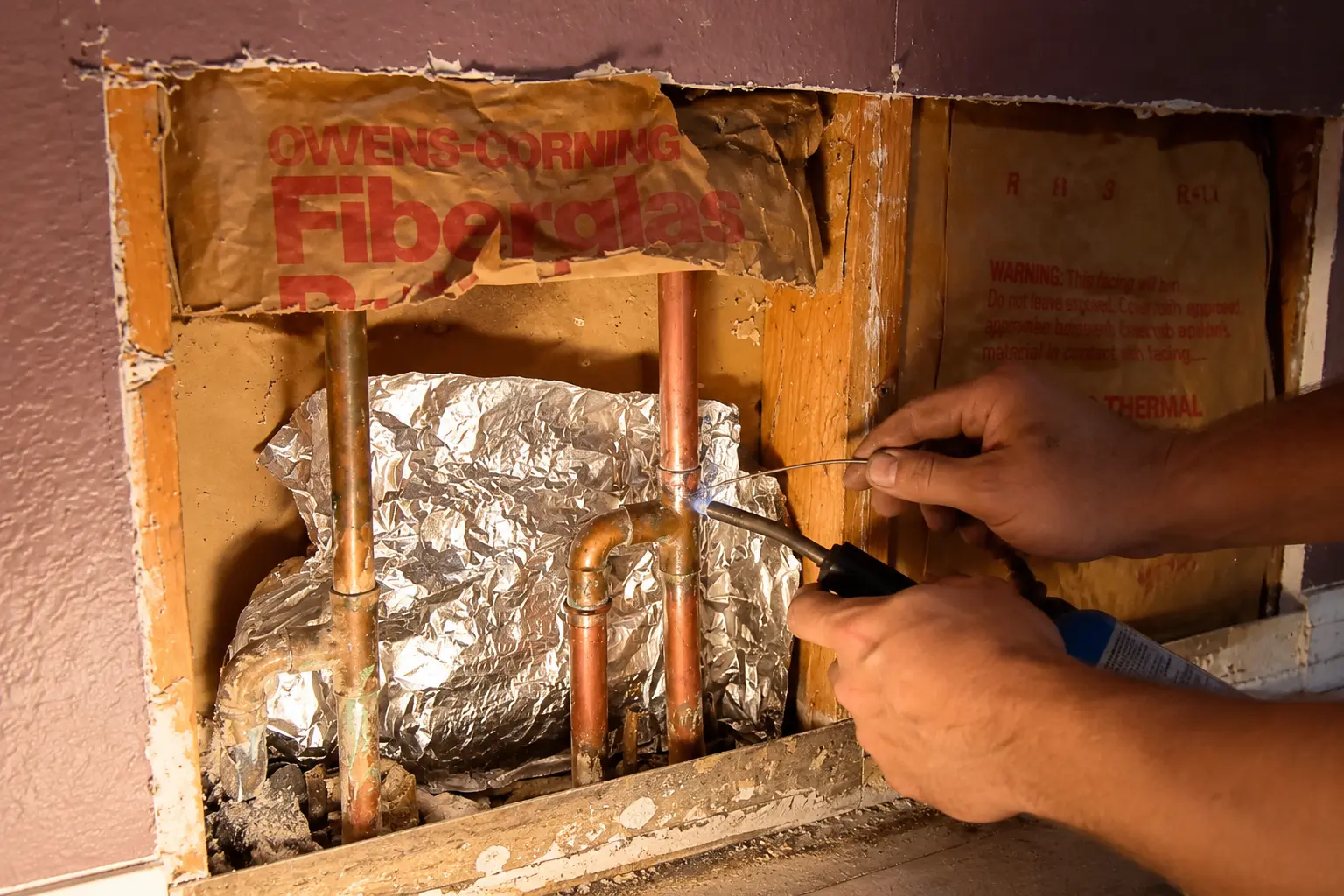
One slab leak forces a decision every homeowner dreads: fix just the failed section, or replace the whole system while you are at it? Both are legitimate answers. The right one depends on the age and condition of your pipes, your leak history, and what sits above the slab.
This guide walks through spot repair and full repiping side by side, so you can weigh the tradeoffs with real information instead of a sales pitch.
What Is Spot Repair?
Spot repair targets a single failure point. After detection pinpoints the leak, a small section of slab is opened at that exact location, the damaged pipe segment is cut out, and a new section is joined in. The concrete is then patched and the flooring restored as closely as possible.
This approach makes sense when the leak is clearly isolated: one pinhole in an otherwise sound pipe, no signs of widespread corrosion, and no history of repeat leaks. When detection shows the surrounding pipe is solid, fixing just the bad section is the efficient choice.
What Is a Full Repipe?
A full repipe replaces all of the water lines in the home. In slab homes this usually means abandoning the under-slab lines entirely and running new pipes through walls, ceilings, or the attic. The industry-standard decision rule, stated by a Menifee, California plumber, is memorable: one slab leak is bad luck, two is a pattern, and a second slab leak is the signal to reroute or repipe.
Repiping is a bigger project: longer timeline, higher upfront cost, more drywall work. In exchange you get an essentially new plumbing system with no aging pipe left under the slab to fail later.
Spot Repair vs Repipe: Side-by-Side Comparison
| Factor | Spot Repair | Full Repipe |
|---|---|---|
| Scope | One leak point only | Entire pipe system |
| Slab work | One small opening | Usually none (rerouted overhead) |
| Upfront cost | Lower | Higher |
| Project time | Shorter | Longer |
| Best when | Pipes otherwise healthy, first leak | Repeat leaks, old system, widespread corrosion |
| Future leak risk | Remaining old pipe can still fail | Minimal with new system |
| Flooring disruption | Localized patch needed | No slab patching |
When Spot Repair Makes Sense
Choose spot repair when the leak is a one-time event in a relatively young system: a single pinhole with no other weak spots found during inspection, pipe that still shows clean interior walls, and a first-ever leak in the home. A competent detection report should tell you whether the surrounding pipe looks healthy or tired, and that assessment is what the decision should rest on.
When a Full Repipe Makes Sense
Choose repiping when the system itself is the problem rather than one unlucky joint. Published decision criteria from Waldman Plumbing include: three or more pinhole leaks in different spots within 12 months, a system older than 40 years, leaks appearing on straight pipe runs rather than joints, and visible green staining on exposed copper. In these cases, fixing one spot often just moves the next failure a few feet down the line, and the cumulative cost and disruption of repeat slab openings can exceed a single repipe.
What About Rerouting Just One Line?
There is a recognized middle option. Single-line rerouting abandons the failed under-slab line and runs a new line through walls, ceilings, or the attic, leaving the rest of the system alone. According to Angi and local plumbers, it is the best fit when the leak sits under expensive flooring you do not want to destroy, or when one line keeps failing while the rest still tests healthy. PEX is commonly used for reroutes because it fishes easily through wall cavities, though it is an indoor-only material. Multi-story homes are harder to reroute than single-story ones.
Pipe Lifespans: What the Industry Expects
| Pipe material | Expected service life (InterNACHI) |
|---|---|
| Copper water lines | 70 years |
| PEX | 40 years |
| Plastic (PVC/CPVC supply) | 75 years |
| Galvanized steel | No authoritative figure; inspector sources range 20–50 to 40–60 years |
These figures come from the InterNACHI home-inspector lifespan chart. Note the caveat on galvanized steel: there is no authoritative consensus figure, with inspector sources spanning wide ranges. Original manufacturer-era copper in a 1970s or 1980s slab home is well into the window where leaks begin appearing.
Why Copper Pipes Get Pinholes
Copper pinhole leaks are one of the most studied and still least fully understood plumbing problems. Research from Virginia Tech and the Washington Suburban Sanitary Commission, summarized in a 30-year review, links pitting corrosion to high pH combined with high chlorine and low alkalinity, plus aluminum solids in the water. Flow velocity matters too: erosion corrosion accelerates pitting, with plumbing design targeting around 4 feet per second. Chloramine, widely used as a disinfectant, is corrosive to copper but remains listed as a research gap. After decades of study, the review concludes copper pitting is still poorly understood, which is worth knowing before anyone sells you a simple single-cause explanation.
Copper vs PEX for a Repipe
| Factor | PEX | Copper |
|---|---|---|
| Cost and speed | Wins: cheaper material, faster install | Higher |
| Corrosion and scale resistance | Wins | Vulnerable to pitting in aggressive water |
| Freeze tolerance | Wins: expands without bursting | Can burst |
| Fire resistance | Lower | Wins |
| UV exposure | Indoor only | Wins: handles sunlight |
| Track record | Decades, still shorter than copper | Wins: century-plus of use |
| Resale perception | Neutral | Wins: perceived premium by some buyers |
This comparison follows a San Diego plumber’s breakdown. The practical takeaway: PEX is usually the economical and corrosion-proof choice for reroutes and repipes, while copper retains advantages in fire rating, UV exposure, and buyer perception.
Do Repipes Require Permits?
In California municipalities, yes, plumbing permits are generally required for repipes. The City of San Jose’s official Handout 6-4 states that a permit is required for interior water-piping repipes in single-family homes, obtainable by the owner or a licensed contractor, with plans generally not required. Unpermitted plumbing work can complicate a future home sale and may affect insurance coverage. Exact requirements vary by city, so Perris homeowners should confirm with the City of Perris Building Division before work begins.
Can I Just Repipe the Hot Lines?
Yes. Partial repipes, commonly of the hot-water lines only, are a recognized industry practice, and hot lines do fail first because heat accelerates corrosion. But there is a well-known caveat: the remaining lines are the same age and material, and partials often become full repipes within a few years. Doing the whole system at once is usually more cost-effective than mobilizing a crew twice. Discuss phased options honestly with your plumber rather than assuming a partial fix ends the story.
Cost Thinking Without the Guesswork
Spot repair generally costs less than repiping because the scope is smaller: one opening, one pipe section, one patch. Repiping costs more because it covers the whole house. But two or three spot repairs over several years, each with its own slab opening, concrete patch, and flooring restoration, can add up to more than a repipe would have cost upfront. Ask for both options in writing, broken out into detection, access, pipe work, concrete restoration, and flooring, so you compare complete pictures rather than headline numbers.
Perris Notes
A note of accuracy about local soil. It is tempting to blame expansive clay for every slab leak, and in high-plasticity regions that blame is partly earned. But Perris Valley geotechnical documents show local soils testing at low to moderate expansion (Expansion Index roughly 5 to 68), so soil movement is a smaller factor here than in places like North Texas. The more relevant local drivers are slab construction, the regional norm, and aging original plumbing. If your home still has its original copper from the 1970s or 1980s and leaks are appearing, material age alone is a strong argument for repiping rather than patching.
The Bottom Line
Spot repair and full repipe are both legitimate answers to a slab leak; they answer different situations.
One isolated leak in a healthy system calls for spot repair: the smart, economical fix. Aging pipes with a leak history call for repiping, which stops the cycle. Get a detection report that assesses the whole system, get both options quoted in writing, and choose based on pipe condition rather than sticker price alone.
Frequently Asked Questions
How long does a spot repair last?+
How long do copper pipes last?+
What causes pinhole leaks in copper?+
Can I do a partial repipe instead of a full one?+
How long does a full repipe take?+
Will repiping damage my walls?+
Is PEX better than copper for a repipe?+
Can I stay in the house during a repipe?+
Does a repipe require permits?+
What if only my hot water line leaks?+
Will insurance pay for a repipe?+
How do I know my pipes are too old to spot-repair?+
Worried About a Hidden Leak?
Not sure whether your slab leak calls for a spot repair or a full repipe? Slab Leak Pros can assess your system and quote both options in writing.